

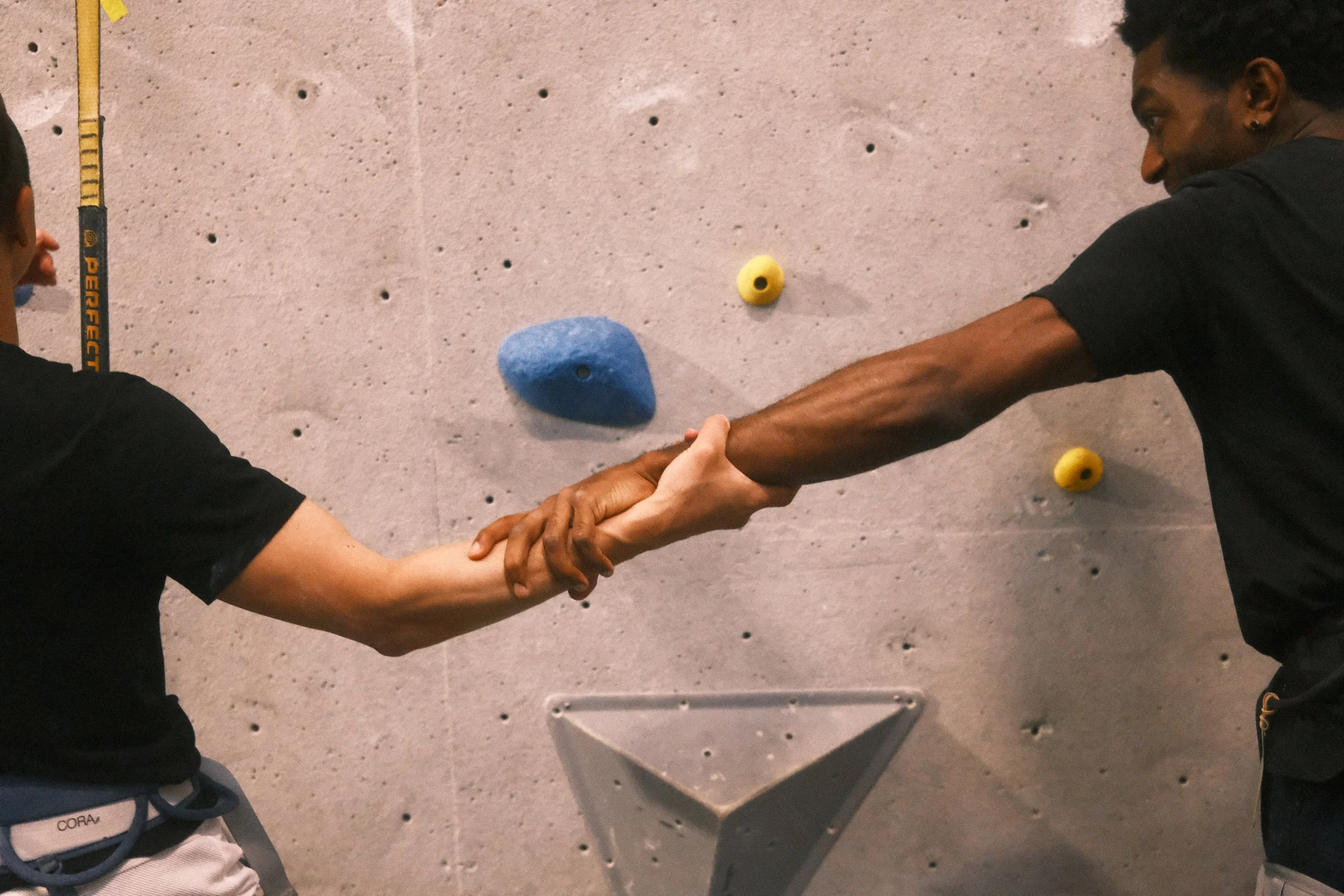
Never been rock climbing before? No problem! Your first visit to a climbing gym might feel a little intimidating, but we're here to tell you that climbing is for everyone. You don't need to be an athlete, have upper-body strength, or know anything about climbing to get started. All you need is a little curiosity, a willingness to try something new, and a sense of adventure!
At Joe Rockhead's, we believe climbing is about more than reaching the top of a wall. It's about challenging yourself, having fun, building confidence, and discovering what you're capable of, one hold at a time.
If you're thinking about giving climbing a try, here's everything you need to know before your first visit.
Climbing Is for Everyone
One of the biggest misconceptions about rock climbing is that you need to be strong, fit, or experienced to enjoy it. The truth is, climbers come in all shapes, sizes, ages, and fitness levels.
Whether you're a complete beginner, someone looking for a fun way to stay active, or simply searching for a new hobby, there's a place for you at the climbing gym.
Climbing is a sport that allows you to progress at your own pace. Some people enjoy solving the puzzle of finding the right holds, others love the physical challenge, and many come simply to have fun with friends.
You don't have to be an expert to belong. Every experienced climber was once a beginner!
Understanding the Different Types of Climbing
When you visit a climbing gym for the first time, you might notice different types of walls, ropes, and equipment. Don't worry! Here's a quick introduction to the main types of climbing you'll find at the gym.
1. Bouldering: Climbing Without Ropes
Bouldering is one of the most accessible ways to get started with indoor climbing. It involves climbing shorter walls, usually around 10 to 15 feet high, without ropes or harnesses.
Instead, thick padded mats cover the floor to provide a cushioned landing if you fall or jump down.
Bouldering routes are called problems, and each one offers a different challenge. You'll use a combination of balance, coordination, strength, and problem-solving to figure out how to reach the top.
What makes it fun?
No ropes or harnesses required.
Great for climbing at your own pace.
Perfect for short attempts and trying different challenges.
A fun way to develop strength, coordination, and confidence.
Bouldering is a great option for beginners because you can jump right in after receiving a basic orientation.
2. Top Rope: Climbing with a Partner
Top rope climbing is one of the most common forms of rope climbing in a gym. In this setup, the rope runs from the climber's harness, through an anchor at the top of the wall, and back down to a partner on the ground.
The person on the ground, called the belayer, manages the rope using a belay device to keep it properly tensioned and help catch the climber if they fall.
As you climb, your partner takes in the slack, helping keep you protected throughout the climb.
What makes it fun?
You can climb higher walls with the support of a rope.
Great for building confidence with heights.
Encourages teamwork and communication.
Offers a variety of routes for different skill levels.
Top rope climbing requires proper instruction and belay training before you can belay another climber independently.
3. Auto Belay: Climb Without a Partner
Want to try climbing a tall wall but don't have a climbing partner? That's where the auto belay comes in!
An auto belay is a mechanical device attached to the top of the climbing wall. You connect yourself to it using your harness, and as you climb, the device automatically takes in the slack.
When you're ready to come down, simply let go of the wall and the device lowers you safely to the ground at a controlled speed.
What makes it fun?
No climbing partner needed.
Great for beginners who want to try rope climbing.
Allows you to focus on your own climbing experience.
You can climb at your own pace.
Before using an auto belay, you'll need to receive an orientation on how to properly attach yourself and complete the required safety checks.
4. Lead Climbing: Taking It to the Next Level
Lead climbing is a more advanced form of rope climbing that gives climbers more independence as they move up the wall.
Unlike top rope climbing, where the rope is already secured through an anchor at the top, lead climbers bring the rope with them as they climb. Along the route, they clip the rope into quickdraws attached to the wall.
A partner on the ground manages the rope and provides belay support.
Lead climbing requires more experience, technical knowledge, and training than the other types of climbing.
What makes it exciting?
Offers a greater technical challenge.
Develops confidence, focus, and decision-making.
Allows experienced climbers to explore more challenging routes.
Adds another level of progression to your climbing journey.
If you're brand new to climbing, don't worry about lead climbing just yet. It's something you can work towards as you gain experience!
What to Expect During Your First Climbing Session
Now that you know the basics, what actually happens when you walk into a climbing gym for the first time?
Here's a breakdown of what your first visit might look like.
1. Check In and Get Comfortable
When you arrive, head to the front desk and let the staff know it's your first time. They'll help you with the check-in process, explain the facility, and answer any questions you may have.
The good news? You don't need a reservation to try bouldering or auto belays! You can simply drop in during our regular opening hours and get started. Just check in at the front desk, complete your waiver, and our staff will walk you through the basics.
If you don't have your own equipment, you can rent climbing shoes and a harness (depending on the type of climbing you plan to try).
Please note that other climbing activities, such as top rope and lead climbing, may require prior instruction, certification, or additional arrangements.
2. Get a Safety Orientation
Before getting on the walls, you'll receive an introduction to the gym's rules, safety guidelines, and climbing areas.
Staff will explain how to use the equipment, how to fall safely when bouldering, and how to properly use auto belays if you plan to try them.
Remember, there's no such thing as a silly question. If you're unsure about something, just ask!
3. Start Climbing!
This is the fun part! Once you're familiar with the basics, it's time to get on the wall.
Start with easier routes and give yourself time to get comfortable. You might be surprised by how much technique and balance matter in climbing.
Don't worry if you can't reach the top on your first try. Falling, resting, and trying again are all part of the experience.
Take breaks when you need them, explore different routes, and enjoy the process.
4. Challenge Yourself and Have Fun
One of the best things about climbing is that progress looks different for everyone.
Maybe your first goal is simply getting off the ground. Maybe it's reaching the top of a bouldering problem or completing your first full-height climb.
Whatever your goal, celebrate the small victories. Climbing is about personal progress, not competing with the person on the wall next to you.
What Should You Wear and Bring?
You don't need much to get started!
Here's what we recommend bringing for your first visit:
Comfortable athletic clothing: Wear something flexible that allows you to move freely. Avoid overly loose clothing that could get caught on holds or equipment.
Climbing shoes: Specialized shoes help you grip the wall and stand securely on small footholds. You can rent a pair at the gym.
Water bottle: Climbing can be more physically demanding than you expect, so stay hydrated!
A positive attitude: Be ready to try, learn, laugh, and maybe surprise yourself.
You don't need to bring a harness or other climbing equipment if you're renting from the gym.
A Few Tips for First-Time Climbers
Before you head out for your first session, keep these tips in mind:
1. Don't rely on your arms alone. Climbing is a full-body activity. Use your legs to push yourself up, keep your hips close to the wall, and look for opportunities to rest.
2. Start easy. Choose beginner-friendly routes and focus on learning how to move rather than how quickly you can reach the top.
3. Take your time. There's no rush. Rest between climbs, hydrate, and listen to your body.
4. Don't be afraid to fall. Falling and trying again are part of climbing. Learn the proper techniques during your orientation and follow the gym's safety guidelines.
5. Ask for help. Climbing gyms are communities, and most climbers are happy to share advice and encouragement. Staff are also there to help you feel comfortable and safe.
6. Come with friends or come alone. Climbing is a great social activity, but you don't need a partner to get started. Bouldering and auto belays are great options for solo visits.
Ready to Give Climbing a Try?
Your first climbing session doesn't have to be about reaching the top or proving anything. It's about trying something new, having fun, and discovering a sport that you can enjoy for years to come.
At Joe Rockhead's, we're excited to welcome climbers of all experience levels, from complete beginners to seasoned climbers. Whether you're coming with friends, looking for a new way to stay active, or simply curious about what climbing is all about, there's a wall waiting for you.
Don't wait until you're strong enough, fit enough, or experienced enough. Start where you are. Your climbing journey begins with your first climb!